Housing and Utility Deductions from Dairy Wages
Many dairy jobs come with a house, trailer or apartment close to the barn. That convenience can also raise questions about what comes out of your paycheck. Here is how to sort it out.
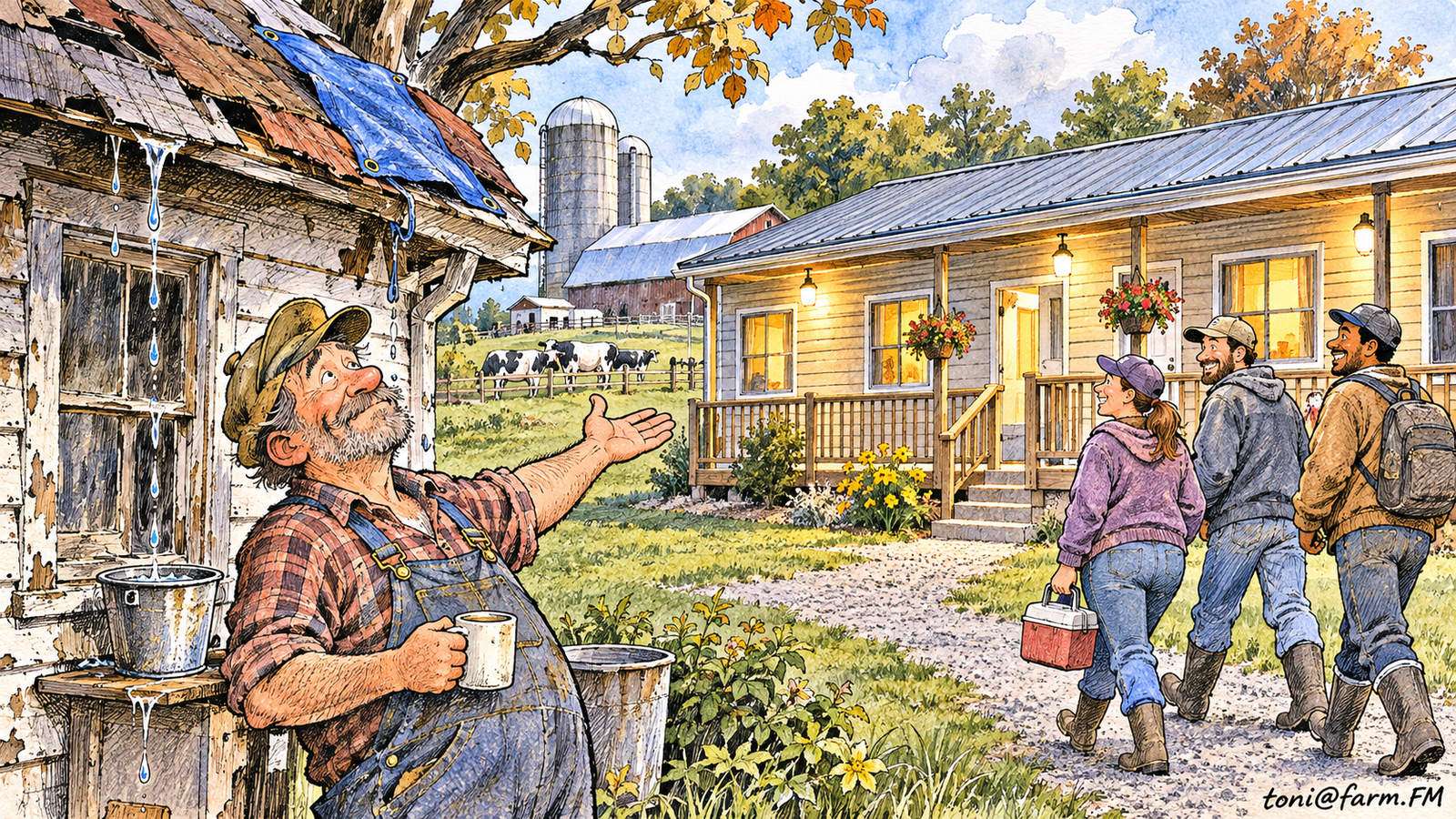
Can an employer deduct housing costs from pay?
In general, employers may provide housing and may sometimes count or deduct its value under certain conditions, but wage rules limit how this works and what records are needed. The details depend on the specific arrangement, and they change, so check the current rule with the Wage and Hour Division.
Texas also has a process for wage claims through the Texas Payday Law program. Nothing in this article is legal advice; for a specific deduction you are unsure about, ask the agency or a Texas employment attorney.
For more on pay and hiring, the career tips at this farm careers resource cover what to ask when a job comes with a house.
What should be in writing?
Any deduction should be agreed to clearly and described on paper. A good housing agreement explains what is included, what is not, how utilities are handled, what happens when employment ends, and who handles repairs.
Ask for a copy. Keep it with your pay stubs. If you do not read English fluently, ask for it in a language you understand and for time to review it.
- Amount or method of any deduction
- Which utilities are included
- Repair and maintenance responsibilities
- Notice and move-out terms if the job ends
How do utilities fit in?
Sometimes utilities are included, sometimes split, sometimes metered separately. Rural Texas homes may use propane, well water or a shared meter, which can make bills hard to divide fairly. If the farm shares one meter among several homes, ask how the farm splits it.
Employers should keep copies of the bills and the calculation. Employees can ask to see them. A transparent method prevents most disputes before they start.
What about condition and safety of the housing?
Housing quality matters as much as price. Working heat, safe wiring, clean water and a way out in an emergency are basic expectations. Some arrangements involve additional rules, especially for housing provided to certain workers, so employers should check with the Department of Labor and local authorities.
The family-safety basics at this farm safety guide cover smoke alarms, fire plans and similar topics that are worth reviewing for any on-farm home. The Ready.gov site has free planning checklists.
A short move-in and move-out checklist works for both sides: photograph each room, note existing damage, test smoke alarms, and write down meter readings. Keep a copy. For related reading on farm family living, farm.FM has a farm news and satire section with the occasional story about rural life.
Questions for a small farm versus a large dairy
On a small dairy, housing is often informal, with a verbal agreement and a handshake. Put it on paper anyway. On a large dairy with many units, ask how maintenance requests are handled and whether the amount is the same for everyone in comparable housing.
Both should plan what happens if someone leaves, is injured or gets sick. A fair notice period and a clear process protect the family living there as well as the farm.
A hypothetical example of a housing agreement review
This is an example, not a real case. A new herd technician is offered a farm house as part of the job. Before signing, the technician asks for the agreement in writing, requests a walk-through with photos of the condition, and asks how the electric bill is split with another house on the same meter.
At the end of the first month, the technician compares the agreement to the pay stub. Everything matches except a small repair charge that was never explained. A short conversation with the supervisor, with the written agreement in hand, clears it up. Documentation turns a possible dispute into a five-minute fix.
The Texas Department of Agriculture lists general farm-employer resources, and the USDA site has housing programs in rural areas that employers sometimes explore. Whether any program fits a specific farm is something to confirm directly at the official source.
Where to look for help
If a deduction looks wrong, start with a calm conversation and your pay stubs. Keep a log of what was deducted and why. If it cannot be resolved, contact the agencies above. The Texas Workforce Commission also lists employer and worker resources.
A little reading on the lighter side helps too. farm.FM has a farming stories section, and one farm.FM story about life near the barn fits this topic well.
Sources and further reading
- DOL Wage and Hour Division: federal wage and overtime rules
- Texas Payday Law (TWC): Texas wage claims
- U.S. Department of Labor: labor rules and programs
- Texas Workforce Commission: employment and labor programs
- Ready.gov: FEMA disaster preparedness
Ask locally: Contact the Wage and Hour Division, Texas Payday Law staff or a Texas employment attorney about specific deductions.