Payroll Timekeeping for Split Shifts and Milking Rotations
Dairies milk two or three times a day, so a worker's day is often split into pieces with gaps in between. Those gaps are where payroll mistakes love to hide.
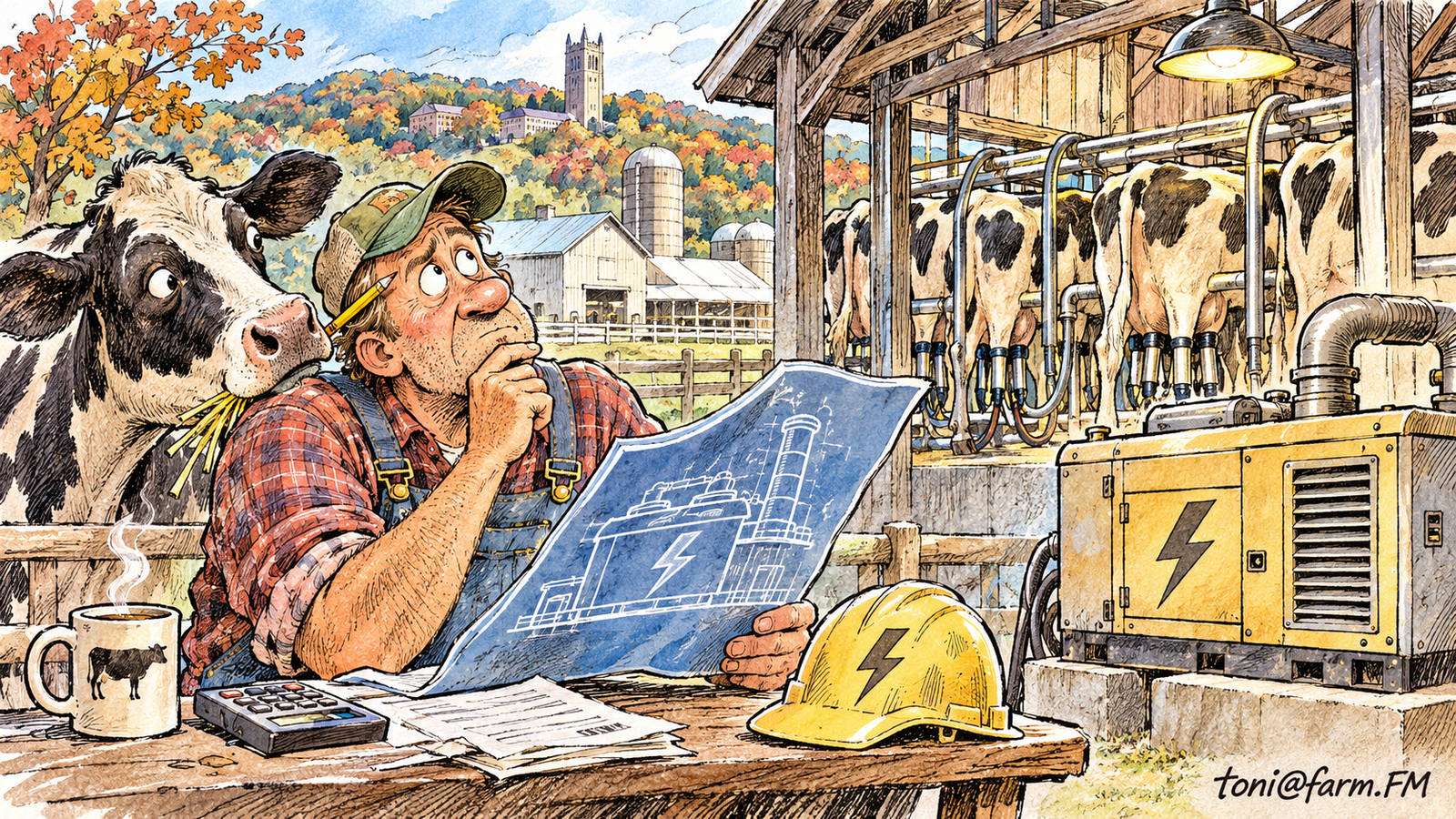
Why are split shifts a timekeeping headache?
A split shift is a workday divided into two or more blocks, such as a morning milking and an evening milking with a long gap between. Rotations add another layer, because the person on the early crew this week may be on the late crew next week.
The main questions are simple to ask and hard to answer: which time counts as work, how is the gap treated, and how do rotations affect weekly totals? The Wage and Hour Division explains how it looks at hours worked, and you should check the current guidance there rather than guess.
What should be recorded every day?
Record the start and stop of each block, any break, who approved changes, and the tasks done. Keep the same format for every employee so that totals add up the same way every week.
Digital time clocks and phone apps work, but so does a paper sheet that the supervisor checks daily. Whatever you use, keep the originals. The U.S. Department of Labor explains general recordkeeping duties, and you should confirm the current requirements.
- Start and stop time for each block
- Meal and rest breaks, when taken
- Tasks outside the normal parlor routine
- Approvals for any schedule change
How should the gap between shifts be handled?
Whether a gap is paid depends on the facts: whether the worker is free to leave, whether they must stay available, and whether duties continue. Do not assume that a gap is automatically unpaid or automatically paid.
Ask an agency or a Texas employment attorney about your specific schedule. The Texas Workforce Commission offers employer resources, and the Texas Payday Law page explains the state wage claim process. This is general education, not legal advice.
A hypothetical rotation example
This is an example, not a real farm. A crew of six rotates between a 3 a.m. start, a mid-morning start and a late-afternoon start over a three-week cycle. A weekly spreadsheet shows each person's scheduled and actual times, and the supervisor reconciles them every Friday.
When a relief milker covers an extra shift, the sheet shows who asked, who approved, and how many hours resulted. At the end of the cycle, totals line up with payroll, and nobody has to argue from memory.
What mistakes do audits tend to find?
Common problems include rounding times in one direction, not counting pre-shift setup, forgetting to record short extra tasks, and letting supervisors fix times by hand without a note. Another is using one pay period for some workers and a different one for others without explaining why.
The fix is small habits: record in real time, review weekly, and keep notes on changes. For more on farm workplace management, see the ideas at this farm employment guide and the herd routines at this dairy farm page.
A weekly review you can build yourself
Set aside the same time each week for a ten-minute review. Pull the sheet, check that every shift has a start and a stop, and flag any block that looks too long or too short. Ask the supervisor to initial the page. If your farm uses an app, export the weekly report and file it.
Workers can do the same on their own phone. A photo of the sheet or a note with the day's times gives you a record that stands apart from the farm's system. The OSHA site is a good reminder that long, split days also raise fatigue risks, so a weekly review is a safety habit as well as a payroll habit.
For small farms with only a few employees, a shared spreadsheet may be enough. For larger dairies, consider asking a payroll professional to set up rotation templates that fill in pay periods automatically. Either way, the goal is the same: no surprises on payday.
Where does a worker start if the hours look wrong?
Bring your own notes to the supervisor first. Many errors are honest ones. If it cannot be settled, use the agencies above. The Bureau of Labor Statistics also offers background on how work hours are measured in general.
Over at farm.FM there are barn-life stories that make long split days feel shared, including this one from the dairy section and a farming stories page, plus a farm.FM story on crew schedules.
Sources and further reading
- DOL Wage and Hour Division: federal wage and overtime rules
- U.S. Department of Labor: labor rules and programs
- Texas Workforce Commission: employment and labor programs
- Texas Payday Law (TWC): Texas wage claims
- Bureau of Labor Statistics: labor and price data
Ask locally: Ask a payroll professional to design your timesheet, and the Texas Workforce Commission or an employment attorney about how gaps are treated.