Benefits Beyond Wages: Health, Housing, and Retirement
Two dairy jobs with the same wage can be very different once you count benefits. Health coverage, housing and retirement savings can change the real value of an offer.
What counts as a benefit?
Benefits include health coverage, paid time off, housing, vehicle use, retirement contributions, training support and sometimes childcare help. Some are required by law in certain situations and others are offered by choice, so check current rules and ask each employer what it provides.
General workforce information is available from the Department of Labor, and the Bureau of Labor Statistics publishes employer benefit surveys in general terms. This article states no figures.
How should workers compare health coverage?
Ask who is eligible, when coverage starts, what the worker pays and what is covered. Ask about family coverage and options for those who live far from a clinic. Rural health resources such as the Rural Health Information Hub explain general options for rural communities.
Workers who are hurt on the job should also ask about workers' compensation. Texas employers may choose whether to carry it, so confirm the current rules and the farm's choice with the Texas Department of Insurance.
- Who is eligible and when does coverage start?
- What does the worker pay?
- Is family coverage available?
- Is workers' compensation carried?
What about housing as a benefit?
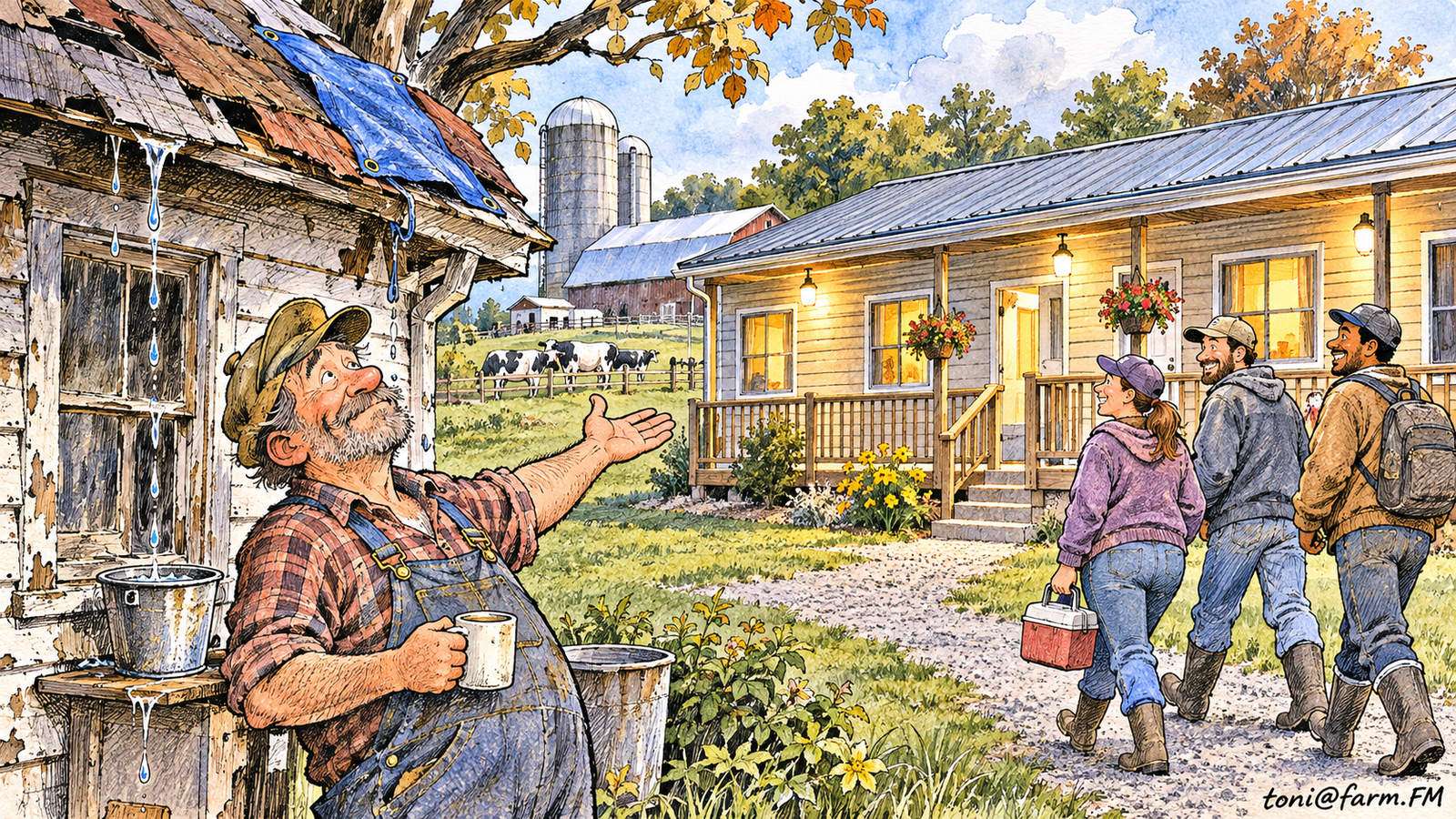
Housing can be valuable, especially on a rural dairy, but it comes with rules and trade-offs. Ask about the written agreement, utilities, repairs and what happens if the job ends. Housing arrangements may affect how pay is calculated, so employers should confirm with the Wage and Hour Division.
The USDA Rural Development site lists programs related to rural housing and communities, and the farm family safety basics at this farm safety guide are worth a read for any on-farm home.
Workers should ask who to contact when a housing repair is needed, and how quickly the farm responds. A clear answer is part of the benefit.
How do retirement benefits work on a small dairy?
Retirement plans range from simple savings arrangements to larger plans, and each has its own rules. A small farm can often start with something basic and grow it. The IRS explains retirement plan options for small employers, and a financial professional can help choose.
Workers can ask whether a plan exists, whether the employer contributes, and what the vesting rules are. Even a small contribution over a career matters. This is not financial or tax advice.
A hypothetical offer comparison
This is an example, not real offers. One dairy offers a slightly higher wage and no benefits. Another offers a slightly lower wage, family health coverage, a retirement match and on-farm housing. The worker lists the monthly cost of each item, asks about the details in writing and compares totals.
The second offer comes out stronger for a family and weaker for a single worker who already has housing. Neither is right for everyone, which is why the questions matter.
Look at the whole picture each year. Benefits that nobody uses cost money without helping anyone, so ask the crew what they value, and adjust when you can. A short anonymous survey or a conversation at a team lunch will tell you more than guessing.
Questions for a small farm versus a large dairy
A small dairy should ask what is simple and sustainable: a clear housing agreement, paid time off that people can actually use, and perhaps a basic retirement option. A large dairy should ask how benefits are communicated, translated and enrolled, and whether supervisors can answer common questions.
Both should write a one-page benefits summary in plain language, review it at orientation and update it when anything changes. Workers should keep a copy. Ask the USDA or the Texas Workforce Commission about programs that may help employers in rural areas.
Employers should also remember that benefits information must be accurate. Do not promise anything you have not confirmed, and say when something is a policy that may change.
How can small employers compete?
Small dairies may not match large ones on benefits, but they can offer predictable schedules, training, a path to supervision, flexible time off or help with transportation. The ideas at this agricultural careers guide describe what workers often value.
The Texas Workforce Commission and Texas Farm Bureau are places to ask about programs and resources. At farm.FM, you can find light reading in the dairy section and education section, plus a farm.FM story about farm family life.
Sources and further reading
- U.S. Department of Labor: labor rules and programs
- Bureau of Labor Statistics: labor and price data
- Texas Department of Insurance, Workers Compensation: Texas workers comp information
- Rural Health Information Hub: rural health resources
- IRS: federal tax guidance
- USDA Rural Development: rural business and community programs
Ask locally: Ask a benefits adviser, the Texas Department of Insurance or your Texas Farm Bureau contact about coverage and plan options.