Business, Science and Compliance
The Dairy HR Manager: Building a Strong Team
A dairy HR manager keeps the people side of a milking operation running: hiring, onboarding, paperwork, schedules, safety training and the hard conversations. Here is what the job involves and how to move toward it in Texas.
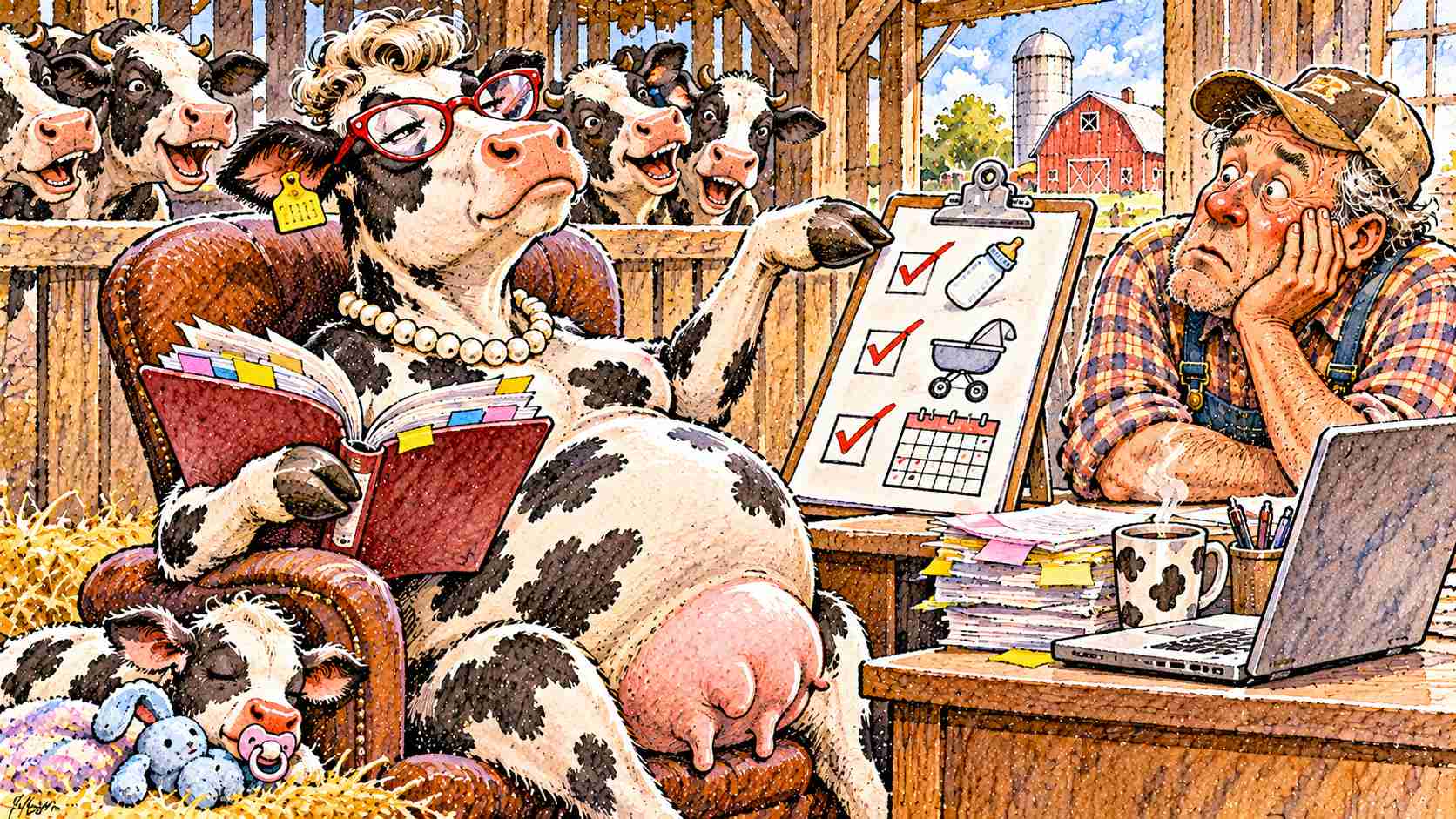
What does a dairy HR manager actually do?
The role covers the full employee cycle. That means writing job postings, screening applicants, running interviews, completing onboarding forms, keeping personnel files, answering pay questions and helping supervisors handle problems early. On a small dairy the owner or an office manager may do this alongside other work, while a large operation near Dublin or across the Texas Panhandle may have a dedicated person or team.
Because dairies run milking shifts around the clock, HR work rarely follows a 9 to 5 pattern. Schedules, shift swaps, holiday coverage and fatigue all land on this desk, and good HR people learn the barn rhythm well enough to know why a schedule that looks fine on paper fails at 2 a.m.
- Hiring, onboarding and orientation
- Payroll questions and timekeeping records
- Training records and safety documentation
- Policies, handbooks and discipline process
Who is this career a good fit for?
It suits people who listen well, stay calm in tense moments and like solving practical problems. You do not need a farm background, although you do need respect for how milking, feeding and calving shape everyone's day. People of every background and many first languages build HR careers in dairy, and bilingual skills are often valuable on Texas crews.
Interest in rules and fairness matters as much as people skills. You will be asked questions about hours, leave, pay and conduct, and the honest answer is sometimes that you need to check the official source before replying.
How do you train for it in Texas?
There is no single required path. Many people start with a business, human resources or agriculture course at a Texas community college or university, then add experience in an office, a packing plant or on a dairy. The Texas A&M AgriLife Extension workforce and management programs are useful places to see what employers are asking for, and Texas Workforce Commission offices list training and job-matching services.
Professional HR certificates exist through national associations, and short courses on employment law, safety training and supervision help even without a full degree. Ask local employers which credentials they value before paying for any.
- Business or HR coursework at a community college
- On-the-job time in payroll, safety or office roles
- Short courses in supervision and employment rules
What rules does the job touch?
Dairy HR sits close to several areas of law. Wage and overtime questions involve the Wage and Hour Division, and agricultural exemptions exist with conditions, so never assume a rule applies or does not apply. Hiring paperwork involves Form I-9 guidance from USCIS, and harassment and discrimination questions point to the EEOC. Workplace safety expectations come from OSHA.
In Texas, employers may choose whether to carry workers' compensation, so confirm current rules and options with the Texas Department of Insurance. This article is general education, not legal advice. When a situation is serious, talk to a Texas employment attorney or the agency itself.
A day in the life (an example)
Picture a mid-sized dairy. The morning starts by checking who called in for the early milking shift and calling a trained backup. Mid-morning is a new hire orientation covering parlor safety, animal handling and who to ask when something looks wrong. After lunch there is an interview for a feed crew opening, then a conversation with a supervisor about a repeated late arrival. This is a hypothetical day, and real ones vary.
The evening may end with updating training logs so that every employee's safety sessions are documented. The job rewards people who write things down clearly and follow up.
How does it connect to other dairy roles, and where can it lead?
HR works with herd managers, parlor leads, mechanics, drivers and the owner. You become the bridge between what the crew needs and what the business can afford. A related guide on ag careers and job searching shows how adjacent roles fit together.
The ladder often runs from office assistant or payroll clerk to HR coordinator, then HR manager, then operations or general management, or into consulting and recruiting. Some people move to larger processors, cooperatives or industry groups such as Dairy MAX.
First steps this month
Pick two or three small actions and finish them. Read a few postings on WorkInTexas style job boards, note the skills repeated most, and use Bureau of Labor Statistics occupational pages to understand the general outlook without leaning on any one number. Then talk to someone already doing the job.
Safety habits are part of HR credibility, so also skim the basics at farm safety training basics. And if you want a break from policy reading, farm.FM has dairy stories and the occasional farm.FM piece on the break room to keep perspective.
If the policy side feels dry, farm.FM also keeps a light farm satire section for the days when a handbook rewrite has worn you down.
- Ask a local dairy what HR tasks they handle in house
- Take one short course on supervision or employment basics
- Write a one-page sample onboarding checklist as practice
Sources and further reading
- Texas A&M AgriLife Extension: Texas extension service
- Texas Workforce Commission: employment and labor programs
- DOL Wage and Hour Division: federal wage and overtime rules
- USCIS: work authorization and Form I-9 help
- U.S. EEOC: workplace discrimination and harassment rules
- OSHA: workplace safety
Ask locally: Ask the office manager at a nearby dairy or a Texas Workforce Commission office how local employers handle hiring and onboarding.