The Feed Manager: A Critical Role in Dairy Success
Feed is the largest ongoing cost on most dairies, and the feed manager is the person who makes sure it is mixed right, delivered on time and not wasted.
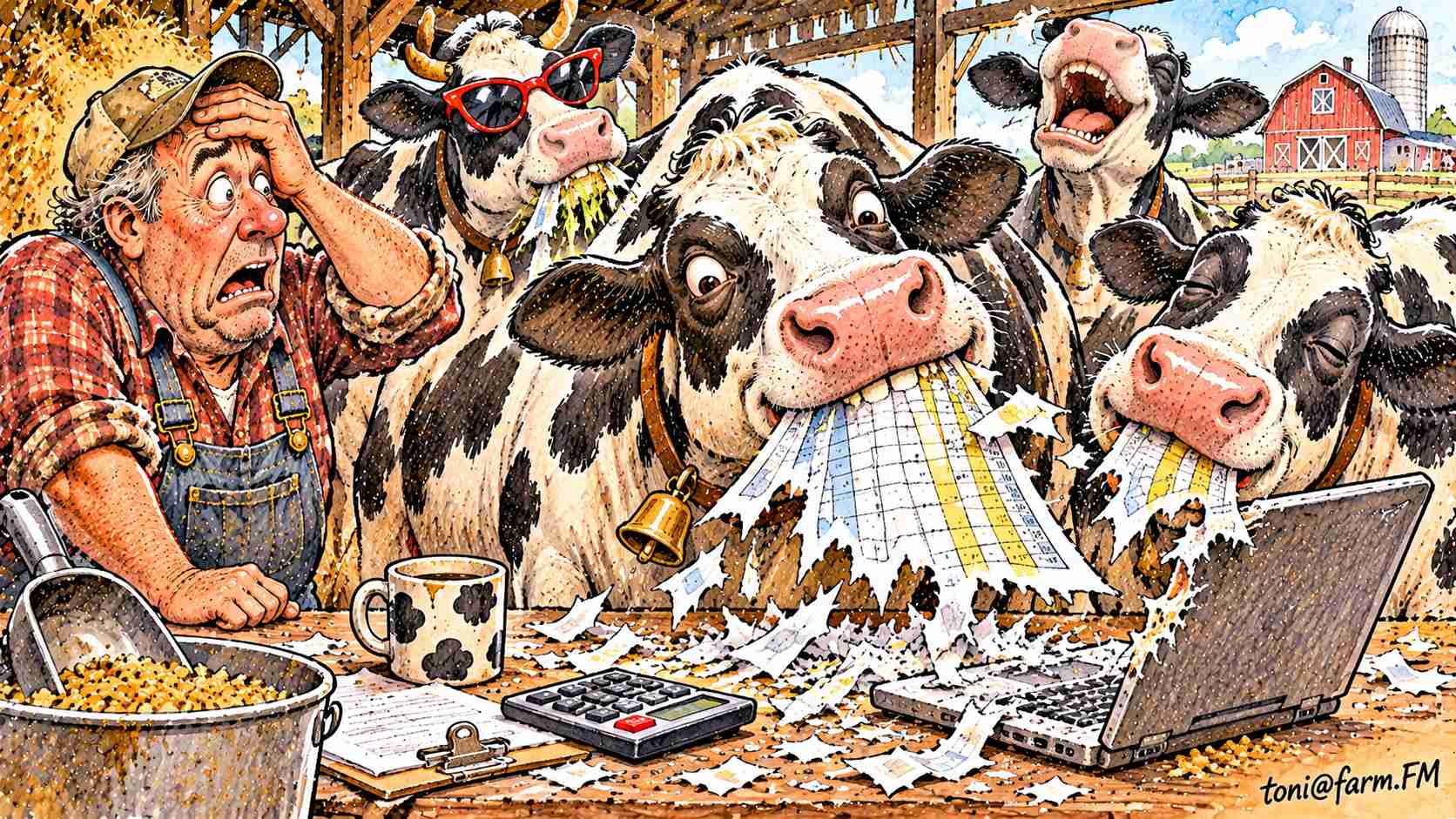
What does a feed manager actually do?
The feed manager oversees ordering, storing, mixing and delivering feed to each group of cows. They follow ration recipes from the nutritionist, check ingredient quality, monitor inventories and manage the equipment that mixes and delivers feed. They also watch for spoilage, mold, shrink and mistakes in loading.
Accuracy is the heartbeat of the job. A ration that drifts from the recipe can show up in milk production and cow health. Many dairies track loads with scales and software so the numbers can be checked.
Hypothetical example: a feed manager notices that loads are consistently a little heavy on one ingredient because the loader operator is eyeballing the last scoop. A simple fix, like a marked line on the bucket and a note on the loading sheet, brings the mix back in line and saves money without anyone being blamed.
What is a sample day like?
Hypothetical example: a feed manager arrives early and reviews the day's loading sheets. They check the silage face, remove spoiled material, and instruct the loader operator. They watch the mixer weights as each ingredient goes in and walk the feed bunk after delivery to see how clean the bunks are. Later, they check inventory against purchase orders and talk with the nutritionist about a new commodity delivery.
Between tasks, the feed manager handles equipment checks, calls suppliers and keeps notes for the herd manager. Weather matters too, because Texas heat, wind and rain change how feed stores and how cows eat.
Record keeping is part of the picture. Many managers keep a daily sheet covering ingredient weights, leftover feed, moisture checks and any equipment problems. Over a season those notes show patterns, such as the point in a storage bunker where quality tends to slip.
Which skills help most?
Attention to detail, comfort with numbers and a mechanical sense matter. You will be working with large equipment, so operating skills and safety habits count. Good feed managers also communicate clearly, because a one-line message to the crew can prevent a costly mix-up.
People from many backgrounds do this work, including those with farm, trucking, equipment or warehouse experience.
- Careful with measurements
- Comfortable with tractors and loaders
- Able to track inventory
- Calm when schedules slip
How do you train for it in Texas?
Most feed managers learn on the job, often after working as a loader or mixer operator. Extension programs from Texas A&M AgriLife Extension include nutrition and forage topics, and community colleges offer agriculture, diesel and business classes. Equipment skills can be built with shop or heavy equipment courses.
The tractor and equipment guide explains the machinery side. Industry information from Dairy MAX and USDA NRCS can help with forage and storage practices.
How does the role connect to others?
The feed manager works hand in hand with the nutritionist, who designs the rations, and the herd manager, who tells them how cows are responding. Mechanics keep the mixers and loaders running. Buyers or the owner handle purchasing contracts, and the accountant watches costs.
Because feed touches almost everything, a feed manager who can read cow behavior and spot problems early is valuable.
Purchasing adds another layer. Feed managers often track prices, delivery schedules and storage space, and they flag shortages early. Asking suppliers what is coming and when helps avoid scrambling when a truck is late or a commodity runs tight.
What are the realities and career ladder?
Dust, noise, heat and heavy equipment mean safety training is essential. Review the farm safety resources and OSHA guidance on machinery and grain or feed hazards. Never enter bunkers or confined spaces without proper training and equipment.
The role can lead to operations manager, purchasing, nutrition support or sales. Look at the Bureau of Labor Statistics for occupational outlook and ask employers about advancement. If you want to read something lighter, farm.FM has dairy humor and stories.
What can you do this month?
Ask a dairy if you can ride along on a feed delivery, with their permission and safety gear. Learn the vocabulary of rations, dry matter and shrink. Check openings at the Texas Workforce Commission.
A farm.FM story on feed and rations is a fun way to learn the terms. Learning-minded readers can find more at farm.FM's education stories.
- Ask for a ride-along or shadow day
- Take a short forage or nutrition course
- Practice keeping a simple inventory log
- Review equipment safety rules
Sources and further reading
- Texas A&M AgriLife Extension: Texas extension service
- Dairy MAX: dairy promotion in the Southwest
- USDA NRCS: conservation programs and technical help
- OSHA: workplace safety
- Bureau of Labor Statistics: labor and price data
- Texas Workforce Commission: employment and labor programs
Ask locally: A dairy nutritionist or Texas A&M AgriLife Extension agent can explain how rations and feed management work in your area.