Workforce Outlook and Career Paths
Careers in Texas Dairy: From Milking to Management
A dairy is a small town with a barn. It needs animal people, mechanics, accountants, drivers and managers, and many careers start in the parlor.
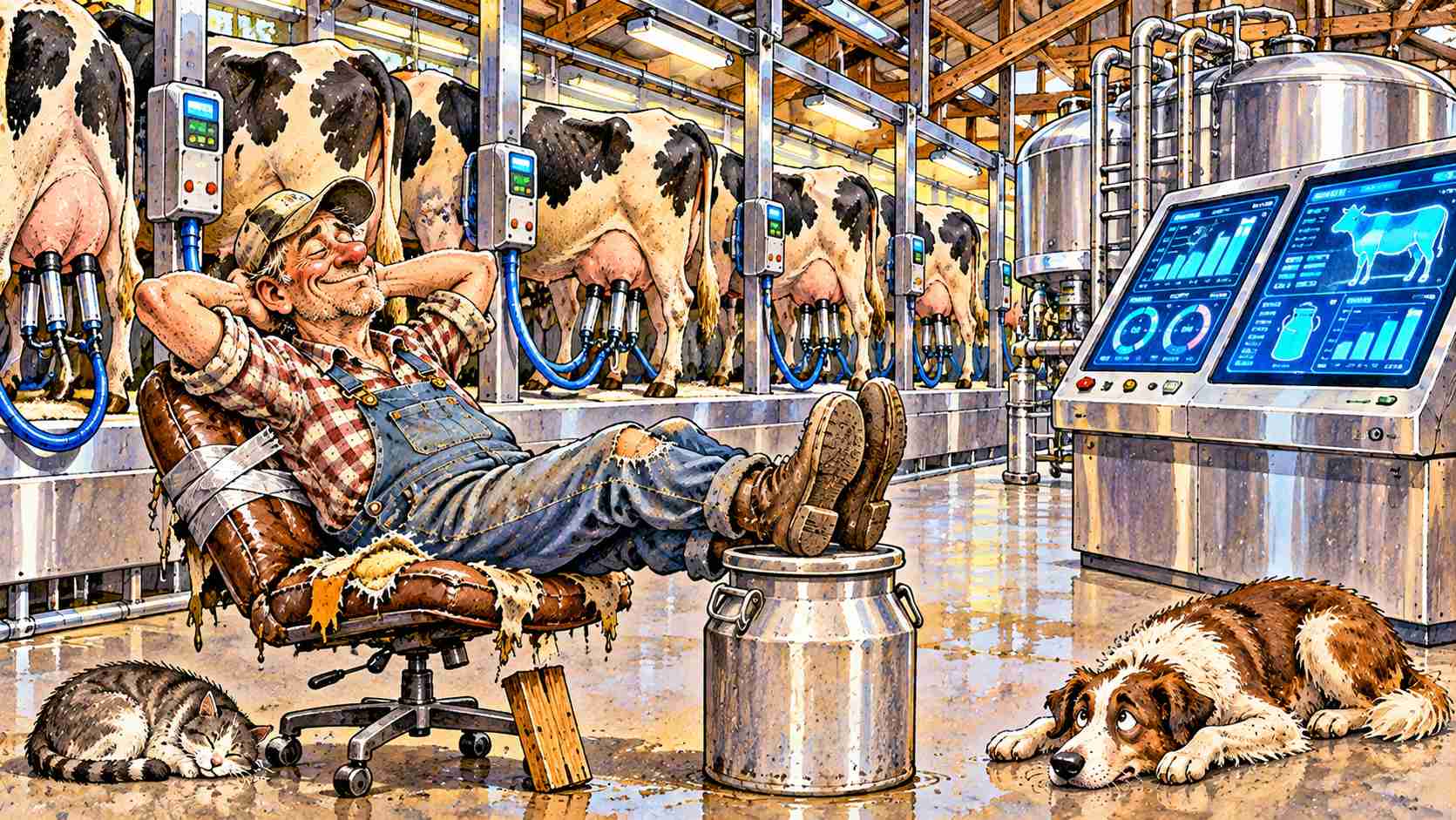
What jobs exist on a Texas dairy?
The visible jobs are milking, feeding, calf care and pen work. Behind them sit hoof trimming, reproduction and breeding work, equipment maintenance, record keeping and bookkeeping, trucking, and supervision. Larger operations may have dedicated roles for each. Smaller ones rely on people who do several jobs in a day.
We do not claim any particular number of openings exists at any dairy. Instead, think of the industry as a set of doorways. Each role is covered in more detail in other profiles on this site.
How does a day in the life look?
Here is a hypothetical example, not a real person. A new milker arrives well before dawn, changes into boots and gloves, and joins a crew that moves cows into the parlor in groups. They prep teats, attach units, watch for signs of illness and make notes on cows that look off. Between milkings they might clean equipment, move fresh cows, or help in the calf barn.
The work is physical, repetitive and tied to cow rhythms. People who thrive on routine, who enjoy animals and who can stay calm around large livestock tend to do well. Many find the team side rewarding.
What training routes lead in?
Many people start with on-the-job training and add skills over time. Texas A&M AgriLife Extension offers educational programs, and Texas community colleges provide agriculture, diesel, welding and business coursework. Check with each school for current offerings. For those drawn to science or management, a college degree can open further doors.
The Texas Workforce Commission can point you to job listings and training help, and the Bureau of Labor Statistics publishes occupational outlook information worth reading before you commit.
Hypothetical example: someone working a day job takes an evening extension class on herd health, then asks a local dairy about weekend relief work to see whether the routine suits them before they change careers.
- On-the-job learning with a trainer
- Community college coursework
- Extension short courses
- Apprenticeships where available
- University programs for science and management
What do employers look for?
Reliability tops most lists: arriving on time, finishing the shift and telling the truth about mistakes. After that come gentleness with animals, willingness to follow protocols and a safety mindset. Communication matters too, since a missed note about a sick cow can cost milk and animal welfare.
Experience helps, but a good attitude and curiosity often count for as much. People of every background and age have built dairy careers by showing up and learning.
Do not be discouraged if you lack a ranch background. Many dairies welcome newcomers who are willing to learn, ask questions and follow protocols, and they regularly train people from other trades.
Where can a dairy career lead?
A common ladder runs from milker to lead milker, parlor supervisor, herd manager or farm manager. Side routes lead to feed management, reproduction, mechanics, quality control or off-farm roles in sales, lending, inspection and extension. Pay and promotion vary, so ask each employer how advancement works.
The dairy herd care guide and the agricultural jobs guide are good for seeing the bigger picture.
What are the realities of safety and lifestyle?
Dairy work involves large animals, machinery, wet floors, heat, noise and chemicals. Good employers train people on each. Read up at OSHA and the farm safety guide before you start. Schedules can be early, split or weekend heavy, so check that the lifestyle fits your family.
If you want to see how people in the industry joke about all this, farm.FM has a dairy section worth a read.
What are your first steps this month?
Visit a dairy if they allow tours, talk to people who work there and ask what they wish they had known. Read a job posting or two. Then make a short list of the skills you already have and the ones to build.
A farm.FM story on dairy careers may give you ideas, and the U.S. Department of Labor offers apprenticeship and labor information. Learning-minded readers can find more at farm.FM's education stories. Official background is also available at USDA's main site.
- Contact your local workforce office.
- Find one short course in animal handling or equipment.
- Ask one dairy worker for a half hour of advice.
Sources and further reading
- Texas Workforce Commission: employment and labor programs
- Bureau of Labor Statistics: labor and price data
- Texas A&M AgriLife Extension: Texas extension service
- OSHA: workplace safety
- U.S. Department of Labor: labor rules and programs
- Dairy MAX: dairy promotion in the Southwest
Ask locally: Your local Texas Workforce Commission office and a Texas A&M AgriLife Extension agent can point you to current training and openings.