Labor Housing Compliance
When a dairy provides housing for employees, the farm becomes a landlord as well as an employer. That brings extra responsibilities worth understanding before the first person moves in.
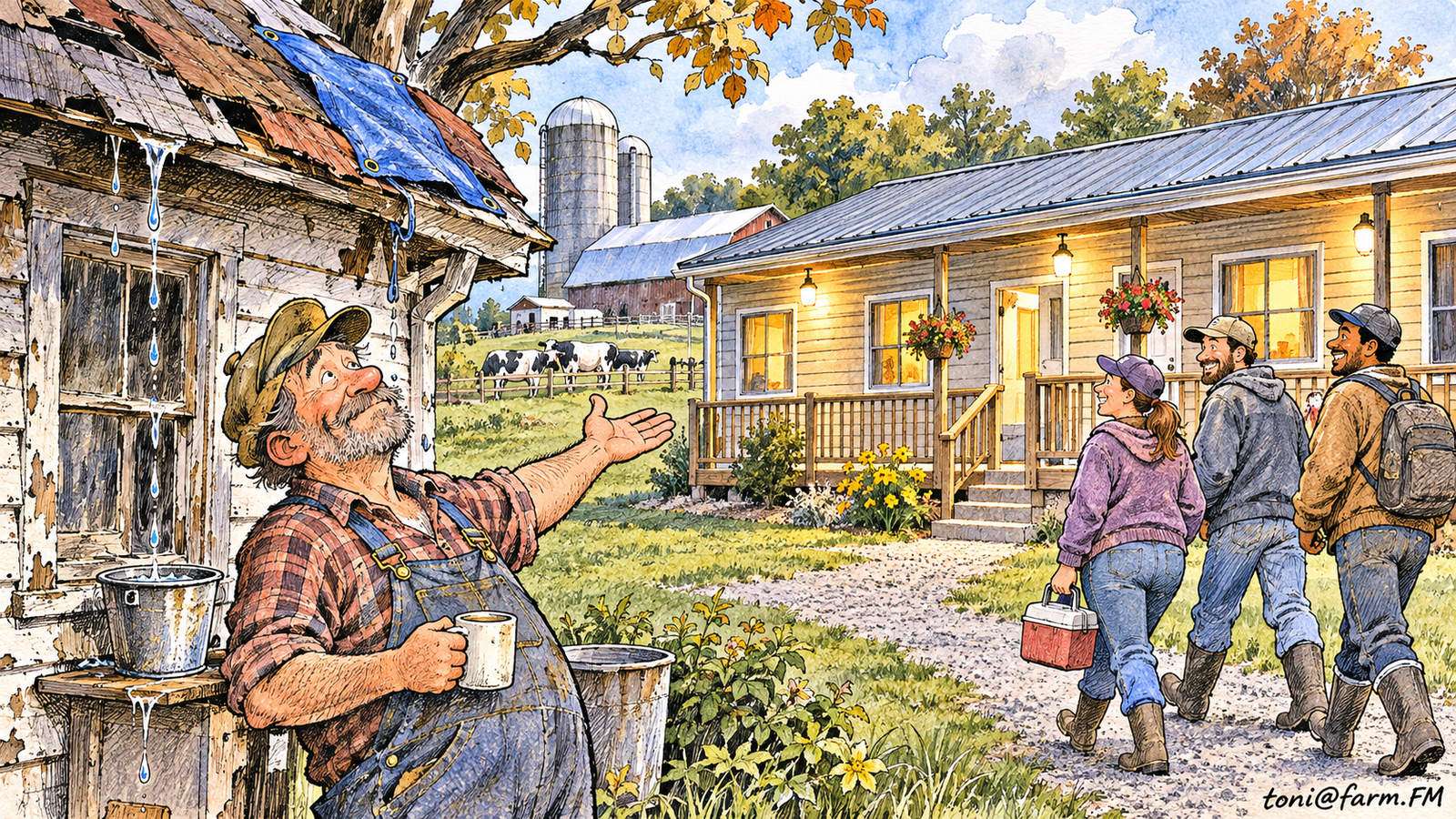
Why does employer-provided housing bring extra rules?
Housing tied to a job is treated differently from an ordinary rental because the worker depends on one party for both income and a place to live. Federal and state agencies pay attention to that relationship, and certain categories of workers, such as those hired through the H-2A program, can trigger specific housing standards.
Dairies near Dublin and across the Texas Panhandle and Central Texas often house herd staff in farm houses, mobile homes or apartments close to the parlor. Whatever the setup, the safest habit is to assume rules may apply and confirm which ones before the lease or the work agreement is signed.
Which agencies should you check with?
Start with the U.S. Department of Labor and the Wage and Hour Division for how housing interacts with pay and agricultural programs, and with OSHA for workplace and camp-style safety standards that may reach farm housing. Rules change, so read the current pages instead of relying on what a neighbor remembers.
For state-level questions, the Texas Department of Agriculture and the Texas Workforce Commission are sensible first calls. A Texas employment attorney can tell you how local codes, lease law and federal rules fit together. This page is general education, not legal advice.
What does a housing walk-through look like?
A good walk-through is a written, dated checklist completed before move-in and again on a regular schedule. Treat it like a herd health protocol: consistent, boring and documented. The goal is to catch small problems before they become a safety issue or a complaint.
Photograph conditions at move-in, keep copies of the checklist, and give the resident a copy of anything that affects them. If a repair is promised, write the date it was requested and the date it was finished.
- Working smoke and carbon monoxide alarms, tested and logged
- Safe heating, cooling and ventilation for Texas summers and winter cold snaps
- Clean drinking water, working plumbing and sanitary toilets
- Sound electrical wiring, secure doors and locks, and clear exits
- Pest control and trash pickup on a set schedule
- A posted emergency contact and the address written clearly for responders
Rent, deductions and written agreements
Keep housing terms in writing, in a language the resident reads comfortably. Spell out whether housing is free or charged, what utilities are included, who handles repairs, and what happens to housing if employment ends. Ambiguity here causes most disputes.
If rent or utilities come out of a paycheck, check the current wage rules before setting it up. Deductions can interact with minimum wage and overtime calculations, so ask the Wage and Hour Division or an attorney how your arrangement should be handled and recorded.
Questions for a small farm versus a large dairy
A small family dairy with one rented house should ask whether the arrangement counts as a lease, a job benefit or both, and whether the insurance policy covers residents. Informal handshake deals are common and are exactly where misunderstandings begin.
A large dairy with several units should ask who owns inspection duties, how requests are logged, and whether a supervisor trained in basic housing standards reviews them. Larger operations also face closer scrutiny, so a clear paper trail pays off. The employer resources at this agricultural jobs and careers guide can help with onboarding wording.
Where to get help in Texas
Texas AgriLife Extension, reached through Texas A&M AgriLife Extension, runs ag business and employer programs, and Texas Farm Bureau often hears from members facing the same questions. Ask them what training or sample documents exist rather than inventing your own from scratch.
For safety content that applies on and off the milking floor, the basics at this farm safety resource are a good companion. Over at farm.FM there is plenty of dairy storytelling, and the dairy section is a decent break after a long day of paperwork, while a farm.FM story about farm worker housing gives another angle.
What should a landlord-employer document?
Keep a folder for each housing unit: the written agreement, move-in photos, inspection checklists, repair requests and receipts, and any notices given to residents. When someone moves out, record the condition and what was returned or owed.
Share expectations about guests, quiet hours and shared spaces in plain language. Rules that apply to everyone and are written down feel fair and are easier to enforce. Stories about how farm families live and work, such as the ones in the farm education section at farm.FM, are a good reminder that housing is about people first, and a modest, well-kept home is a strong recruiting tool.
Finally, treat privacy seriously. Give notice before entering a home except in an emergency, and avoid using housing status as a lever in disagreements about work.
Sources and further reading
- U.S. Department of Labor: labor rules and programs
- DOL Wage and Hour Division: federal wage and overtime rules
- OSHA: workplace safety
- Texas Department of Agriculture: state agriculture agency
- Texas Workforce Commission: employment and labor programs
- Texas A&M AgriLife Extension: Texas extension service
Ask locally: Ask a Texas employment attorney and your local AgriLife Extension office which housing rules apply to your arrangement.